

The day after the Great Blizzard of 2020 dropped a foot of snow on her farm in Bedford, New York, in December, Martha Stewart arose around 4 a.m., like she always does, jumped into her snowplow and got to work. The 79-year-old, who became America’s first self-made female billionaire when her company went public in 1999 ...

Tolstoy was a moralist. He wrote one novel—Anna Karenina—in which infidelity ends in death, and another—War and Peace—in which his characters endure a thousand pages of political, military and romantic turmoil so as to eventually earn the reward of domestic marital bliss. In the epilogue to War and Peace we encounter his protagonist Natasha, unrecognizably transformed.

In computer science, the main outlets for peer-reviewed research are not journals but conferences, where accepted papers are presented in the form of talks or posters. In June, 2019, at a large artificial-intelligence conference in Long Beach, California, called Computer Vision and Pattern Recognition, I stopped to look at a poster for a project called Speech2Face.

Texas lawyer, Rod Ponton, appeared in a Zoom hearing before Judge Roy Ferguson of Texas’s 394th judicial district in Presidio county, south-west Texas, trapped by a cat filter. He and his assistant scrambled to remove the filter as the judge offered tips and straight-faced incredulity while the lawyer confirmed that he "was not a cat". Ponton was using his secretary’s computer when the incident occurred.

The world belongs to those who shape it. And however uncertain that world may feel at a given moment, the reassuring reality seems to be that each new generation produces more of what these kids—five Kid of the Year finalists selected from a field of more than 5,000 Americans, ages 8 to 16—have already achieved: positive impact, in all sizes.

At the very beginning of her new book Seven and a Half Lessons About the Brain, psychology professor Lisa Feldman Barrett writes that each chapter will present “a few compelling scientific nuggets about your brain and considers what they might reveal about human nature.”

My the spring of 2020, the high stakes involved in rigorous, timely and honest statistics had suddenly become all too clear. A new coronavirus was sweeping the world. Politicians had to make their most consequential decisions in decades, and fast.

If you ask a scientist a question about the philosophy of science, there’s a good chance the answer will feature just one or two philosophers. The name of the Austrian-born British philosopher Karl Popper (1902-94) will likely arise in the context of his principle of falsifiability, the ‘demarcation criterion’ that many scientists still use to distinguish science from non-science.

Even if you haven’t been following the news particularly closely the past couple of years, it probably won’t have escaped you that a certain word has been getting a lot of attention: truth.

It was raining in London on the evening of March 5th, and so only a small crowd had gathered outside Mansion House, the official residence of the Lord Mayor of London, to watch the Duke and Duchess of Sussex arrive for an awards ceremony hosted by the Endeavour Fund, a charity that supports wounded ex-servicemen and women.
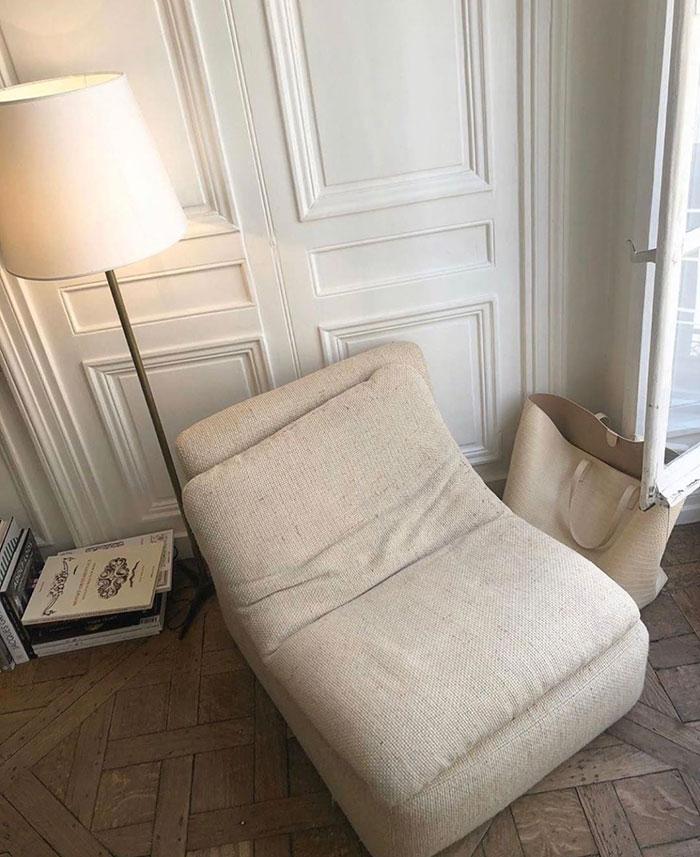
Solitude has become a topic of fascination in modern Western societies because we believe it is a lost art – often craved, yet so seldom found. It might seem as if we ought to walk away from society completely to find peaceful moments for ourselves.

The deserted streets will fill again, and we will leave our screen-lit burrows blinking with relief. But the world will be different from how we imagined it in what we thought were normal times. This is not a temporary rupture in an otherwise stable equilibrium: the crisis through which we are living is a turning point in history.

RATHER THAN beginning my mornings with a book as usual, have been beginning them instead, with the Coronavirus COVID-19 Global Cases by the Center for Systems Science and Engineering (CSSE) at John Hopkins University (JHU) map, a far less pleasant way to begin the day, but given the current state of things, necessary

One of the few mercies during this crisis is that, by their nature, individual coronaviruses are easily destroyed. Each virus particle consists of a small set of genes, enclosed by a sphere of fatty lipid molecules, and because lipid shells are easily torn apart by soap, 20 seconds of thorough hand-washing can take one down.

The muffled screams escaped through the narrowly cracked window and into the frigid winter afternoon air. That’s what drew attention to the blue pickup truck, otherwise inconspicuous in the grocery store’s side lot.