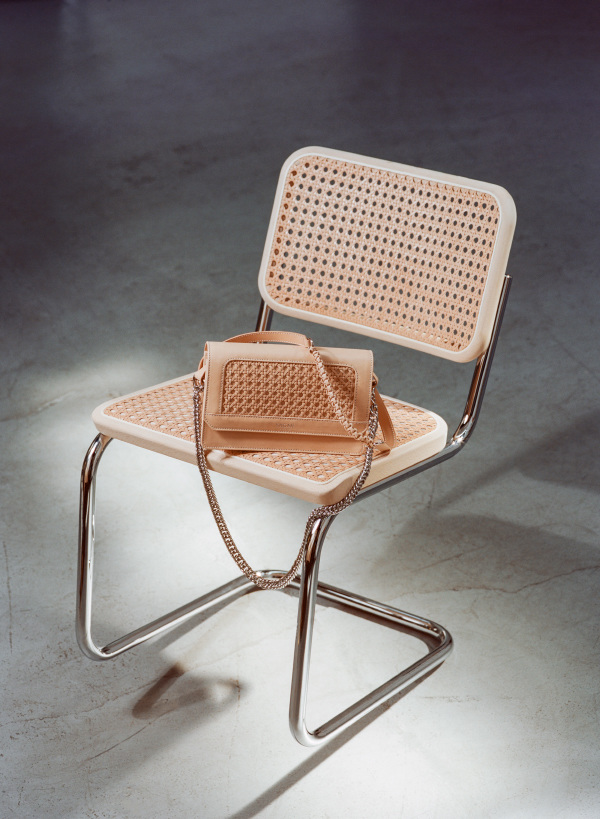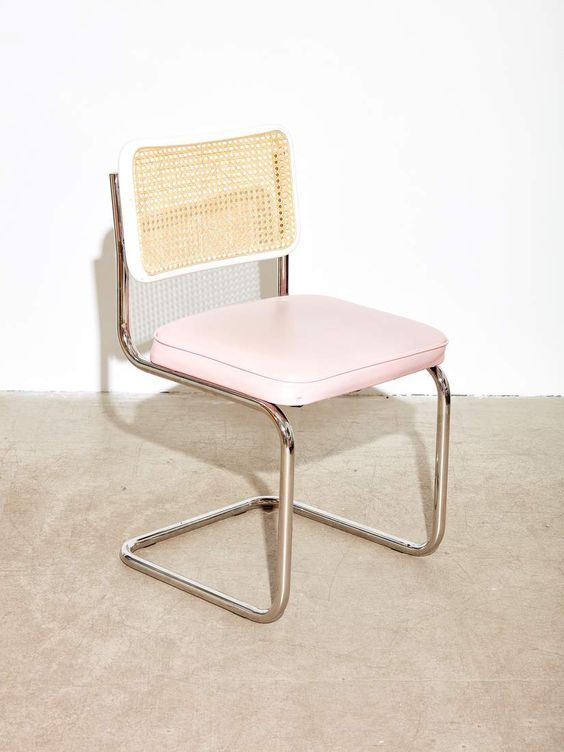
P and I were discussing chairs the other day, and how the iconic tubular steel cantilevered chair was one of our favourite designs. He favours original tubular chrome armchair design with leather seat and back, while I would agree, am also rather fond of the new interpretations with pale-coloured caning, or Mies’ curving wicker version. And whatever your preference, here is a design history of one of the most pivotal designs of the 20th century, with some surprising facts about this modern classic that you may not know…
A cantilever chair is a chair whose seating and framework are not supported by the typical arrangement of 4 legs, but instead is held erect and aloft by a single leg or legs that are attached to one end of a chair’s seat and bent in an L shape, thus also serving as the chair’s supporting base.
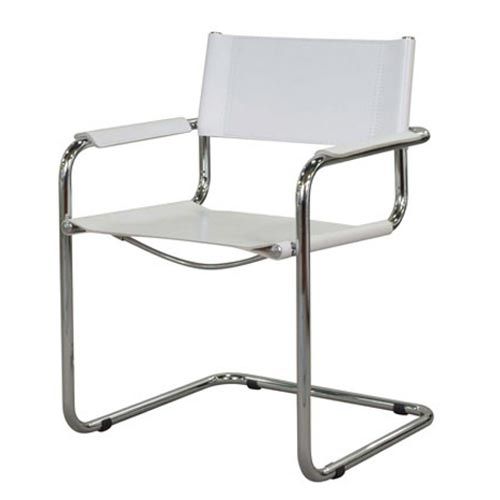

Mart Stam (1899 – 1986)
You may or may not have heard of the name Mart Stam, despite the fact that he created one of the great cornerstones of twentieth century seating design. The Dutch architect, urban planner and furniture designer’s work played pivotal parts in European design and architecture, including furniture design at the Bauhaus; the Weissenhof Estate; the Van Nelle Factory, a modernist landmark building in Rotterdam; and buildings for Ernst May’s New Frankfurt housing project amongst others. Stam’s style of design is classified as New Objectivity, an art movement formed during the depression in 1920’s Germany, as a counter-movement and an out-growth of Expressionism.
Between 1917 and 1919, Stam completed a carpentry apprenticeship and then attended the Rijksnormaalschool voor Tekenonderwijs (State School for Drawing Instruction) in Amsterdam and received his diploma as a drawing teacher. He entered the world of architecture around 1922, at the age of 21, working as a draughtsman in the office of architect Marinus Jan Granpré Molière in Rotterdam and joined the Dutch architect association of Opbouw. He went to Berlin that same year and worked in various architecture offices, including those of Max Taut and Hans Poelzig, until 1923. While in Berlin, Stam met avant-garde architects and artists, including the Russian constructivist, El Lissitzky. It was also here, in 1924, that he constructed a prototype of a cantilevered chair for his wife made of welded gas pipes and plumber’s elbow joints, and thus began the story of the tubular steel cantilevered chair.
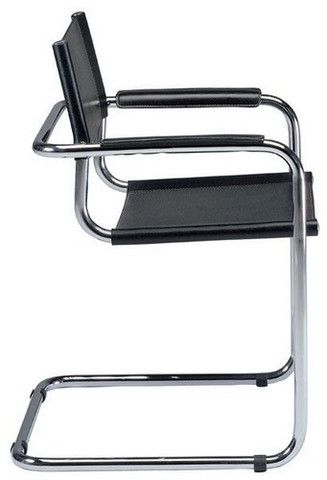
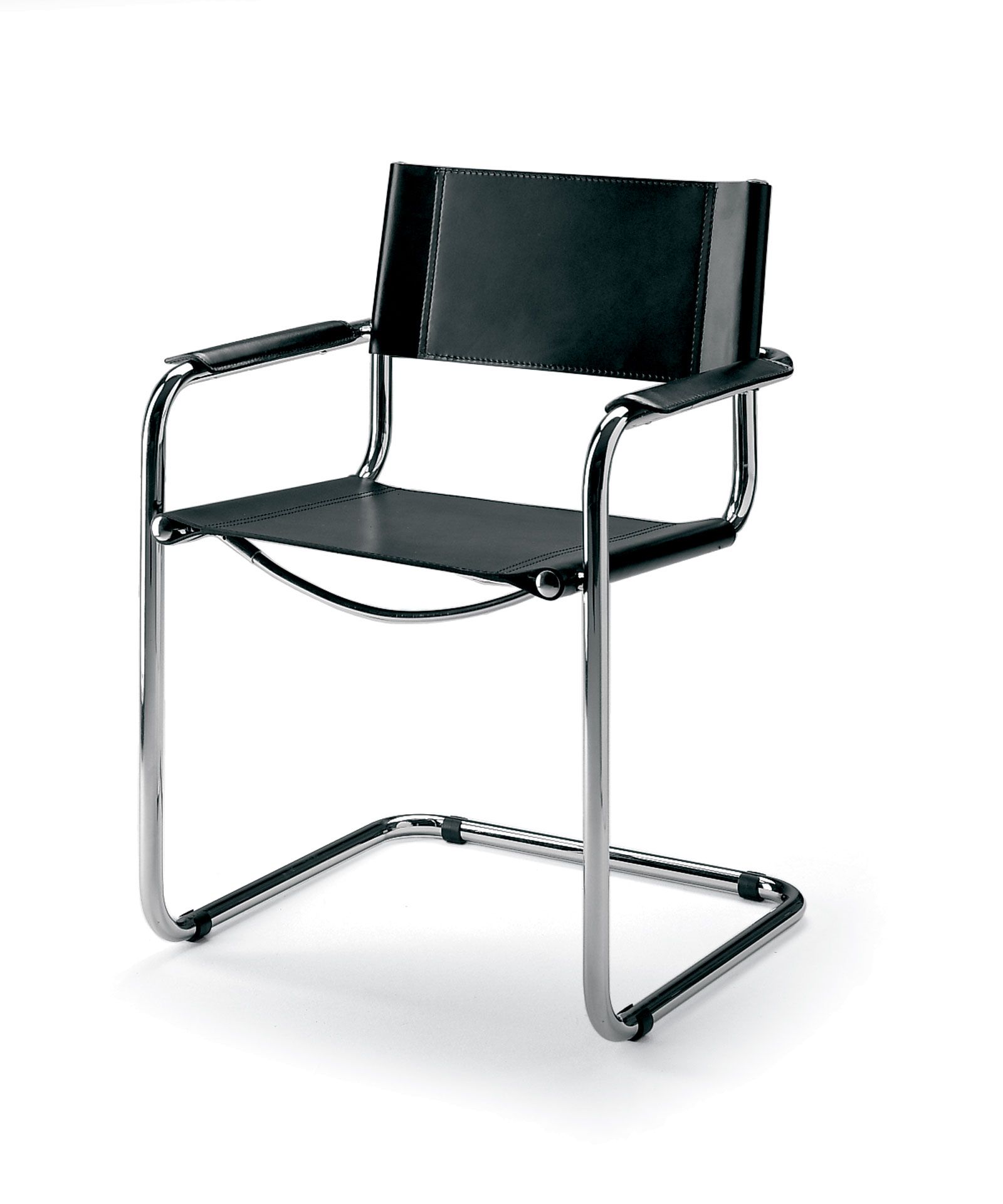
Willem Hendrik Gispen (1890-1981)
So if Mart Stam had such an illustrious career and created one of the great cornerstones of twentieth century seating design, why is it that you may have never heard of him?
The answer is that the history of the tubular steel cantilever chair is a storied one. According to legend, on November 22, 1926, Stam attended a meeting of architects held in Stuttgart to discuss the organization of the Weissenhof Exhibition. At a dinner party in the Stuttgart hotel Marquart, it is said that Stam showed a sketch in blue pen of the chair on the back side of the wedding announcement of the German painter Willy Baumeister. German-American architect Ludwig Mies van der Rohe and Dutch industrial designer Willem Hendrik Gispen were also at the dinner that night.
Shortly after, Gispen, best known for his Giso lamps, unveiled a new cantilevered chair made of tubular steel, the 101 Chair. Stam, of course, was stunned and some say that it was at this time that he began working in secret workshop to prevent any more ‘plagiarism’ of his work. In 1931, the case went to court and the judge found in Gispen’s favour, stating that the 101 Chair was sufficiently different to be considered a distinct design. Unfortunately, because Thonet, the manufacturer of Stam’s design, had not filed a patent request, the case was closed, and Gispen was allowed to continue production of ‘his’ chair.
The following year, Mies, who was also attendance at that fateful dinner, exhibited a beautiful rendition of a ‘free-floating’ chair in one of the houses he designed for the Deutscher Werkbund exhibition Die Wohnung (The Home) in the Weissenhof Estate in Stuttgart, while Stam was still working on his prototype.
Meanwhile, Hungarian architect and furniture designer Marcel Breuer claimed that Stam had stolen the idea from him. The producers of the furniture designed by both Stam and Breuer fought a legal battle from 1929 to 1932 to decide which had invented the cantilever chair. Eventually, the courts decided in Stam’s favour, awarding him the European patent for the cantilever chair. While the chair’s provenance remains unclear, the court did prove the importance of legal expertise in design.
New research indicates that Stam was inspired by a cantilever tubular steel seat seen installed in a 1926 Tatra T12 two-door saloon car.
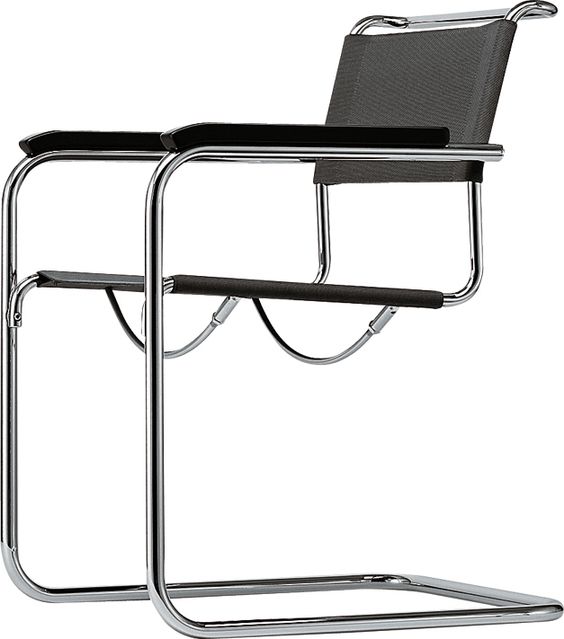
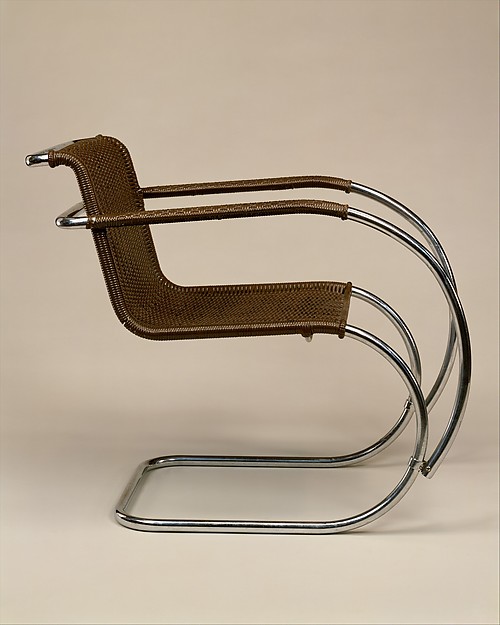
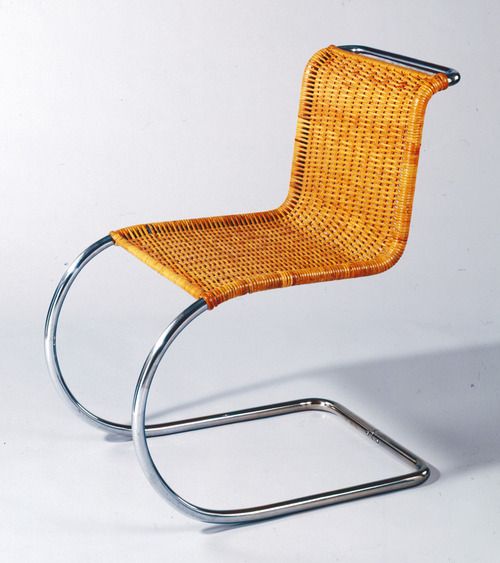
“MR” Armchair
Designer:Ludwig Mies van der Rohe (American (born Germany), Aachen 1886–1969 Chicago, Illinois)
Date:1927
Medium:Tubular steel, painted caning
Dimensions:31 1/2 x 22 x 37 in. (80 x 55.9 x 94 cm)
Classification:Furniture-Wood
Credit Line:Purchase, Theodore R. Gamble Jr. Gift, in honor of his mother, Mrs. Theodore Robert Gamble, 1980
Accession Number:1980.351
Image via The Met
Ludwig Mies van der Rohe (1902 -1981)
Maria Ludwig Michael Mies was a German-American architect. Commonly referred to as Mies, he, along with Le Corbusier, Walter Gropius and Frank Lloyd Wright, was regarded as one of the pioneers of modernist architecture. Mies was the last director of the Bauhaus design school in Dessau, from 1930 until its closing in 1932. In 1938, Mies went to the United States, where he accepted the position as head of the architectural department at the Illinois Institute of Technology, Chicago.
Mies established a new architectural style known as International Style modernism, which put emphasis on clarity and simplicity and using the most technological materials of the day, which during the 1920’s, was steel. The architect used modern materials such as industrial steel and plate glass in his work to create buildings with minimal frameworks balanced against the implied freedom of open spaces, referring to these works “skin and bones” architecture. Mies is often associated the aphorisms, less is more and God is in the details.
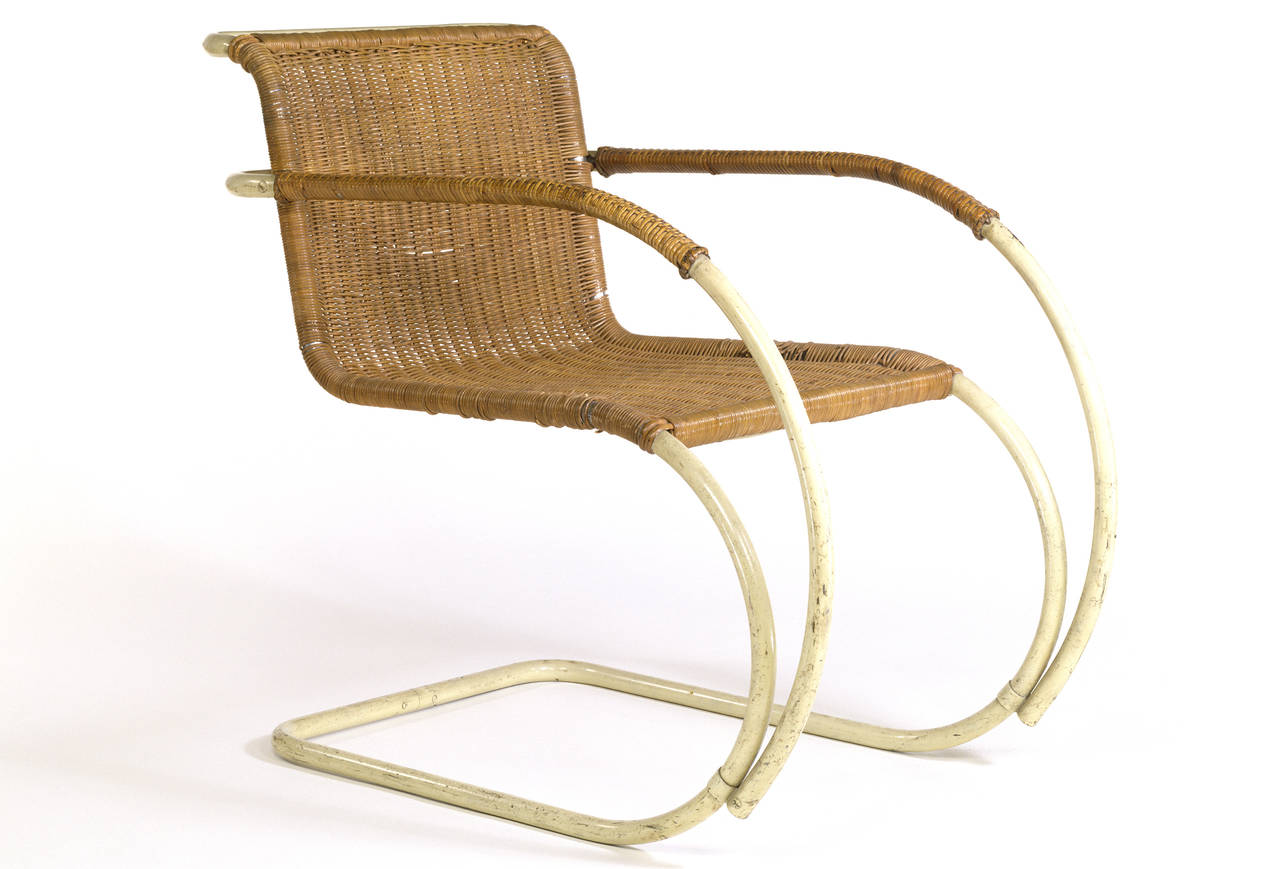
As mentioned above, the architect and designer debut his tubular steel cantilevered chair, developed from a 1924 design by Mart Stam, at the 1927 Stuttgart exhibition. The elegantly proportioned MR chair, as it was known, had a curvilinear shape that Mies patented.
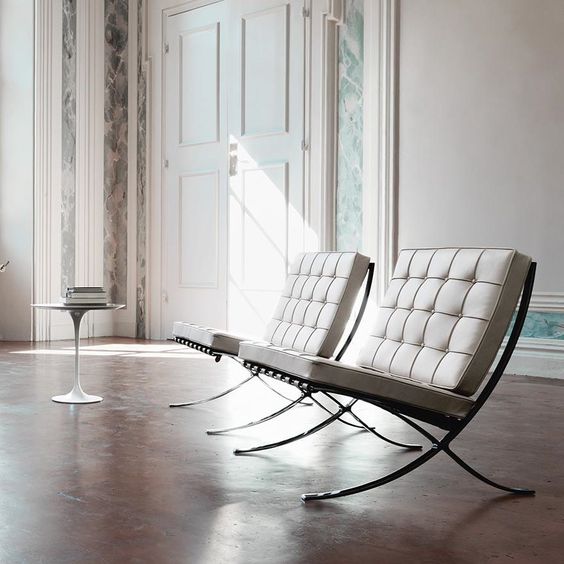
In 1929, Mies created the Barcelona Chair (right), perhaps his most iconic work. Like the MR and Brno Chairs, it is composed of steel and leather. The steel bar legs curve up and over to support the seat and back of the chair. It has been said that Mies’ gift was to give grace to otherwise monotonous substances. The Barcelona Chair attests to his mastery of form, function, and beauty. The Barcelona Chair was originally designed for the German Pavilion, the country’s entry for the International Exposition of 1929 hosted by Barcelona, Spain. It was reintroduced by Knoll International in 1953.
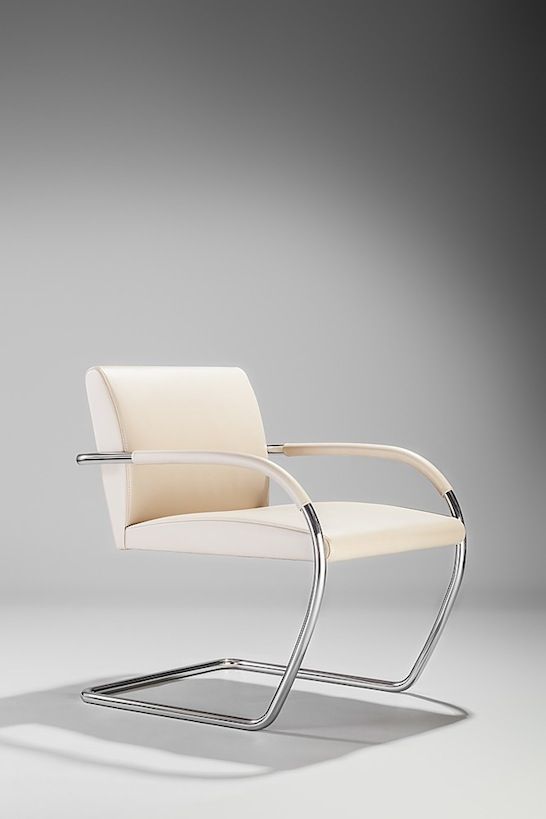
In 1930, the designer created the Brno Chair (left). Also made of steel and leather, the Brno Chair is a study in simplicity. The chair is named after Brno, Czechoslovakia, where it debuted in the Tugendhat House.
It should be noted that Mies collaborated closely with Lilly Reich (1885–1947), a German modernist designer for about ten years during the during the late 1920’s and ’30’s. Together they developed the interiors for the Barcelona Pavilion and the Tugendhat House, two of the major works of modern architecture today. Reich would have closely collaborated with Mies on both the Brno and Barcelona Chairs as well.
Marcel Breuer (1902-1981)
Marcel Lajos Breuer was a Hungarian-born architect and furniture designer who developed his personal style in the carpentry shop at the Bauhaus, moving quickly from student to teacher, to eventually, the head of his own firm. He would also become one of the world’s most popular architects at the height of 20th-century design.
After high school, Breuer was offered a scholarship at the Academy of Fine Arts in Vienna to study painting, only to leave shortly after for an apprenticeship with a Viennese architect. Breuer would later join the cabinetmaking studio of the architect’s brother. In 1921, at the age of 18, Breuer moved to Weimar, Germany, to attend the Bauhaus. Its head, the architect Walter Gropius, immediately recognized Breuer’s talent. In 1925, after four years of study, Breuer was appointed master of the school’s furniture workshop.
At the Bauhaus, Breuer produced the furniture for Gropius’ Sommerfeld House in Berlin as well as his acclaimed series of “African” and “Slatted” chairs. During this time, Breuer met many of the most important artists of this era, including Wassily Kandinsky, László Moholy-Nagy, Paul Klee, and Josef Albers.
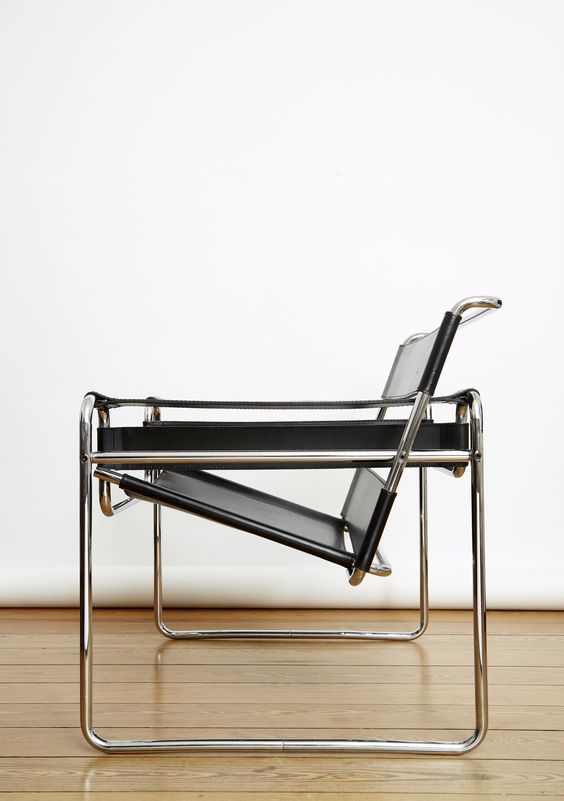
Model B3 Chair
Thought by many to be the most important piece of furniture of the 20th century, Breuer’s Model B3 Chair (also known as the Club Chair and later as the Wassily) was one of the first to be made of tubular steel.
And while Mart Stam may be thought to be the inventor the of tubular steel cantilever chair, Breuer’s creation of the Wassily Chair in 1925 gives him the distinction of being the first to use bent and polished tubular steel as both a supporting framework, and a decorative element for furniture.
At the time, Breuer was interested in finding ways in which new materials could be used in the design of furniture suited to modern life. The B3’s metal frame was inspired by a bicycle frame (his new Adler), and the use of tubular steel allowed the minimum use of material to achieve maximum strength. This innovation would inspire other architects and designers to experiment with two-legged (‘floating’) chair designs.
Nearly a century later, tubular steel remains the main choice for the cantilever chair with Marcel Breuer being perhaps the greatest proponent of this design technique, using the overhanging cantilever design in both furniture and architecture.
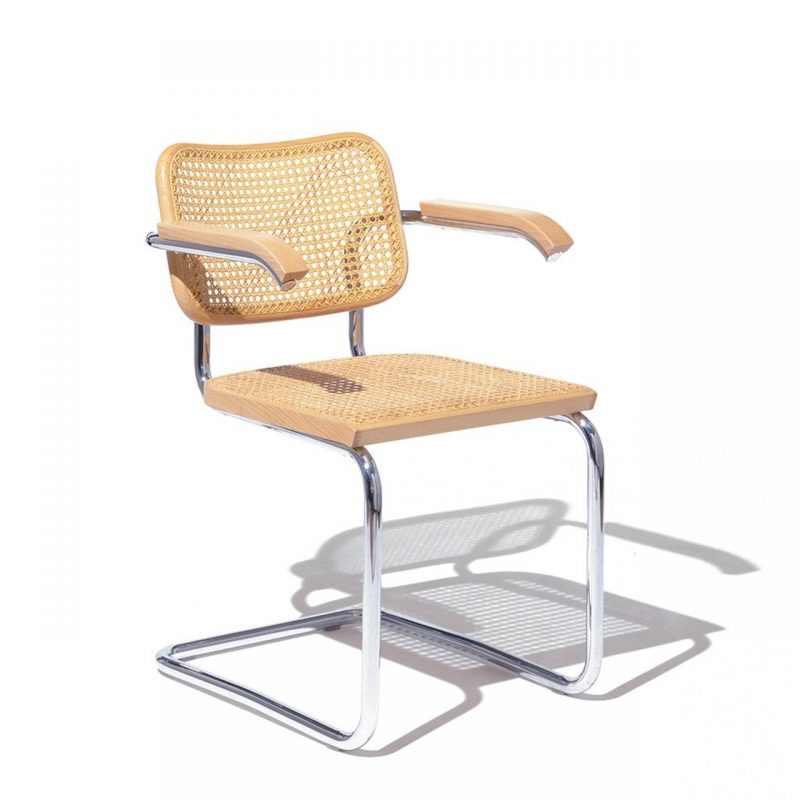
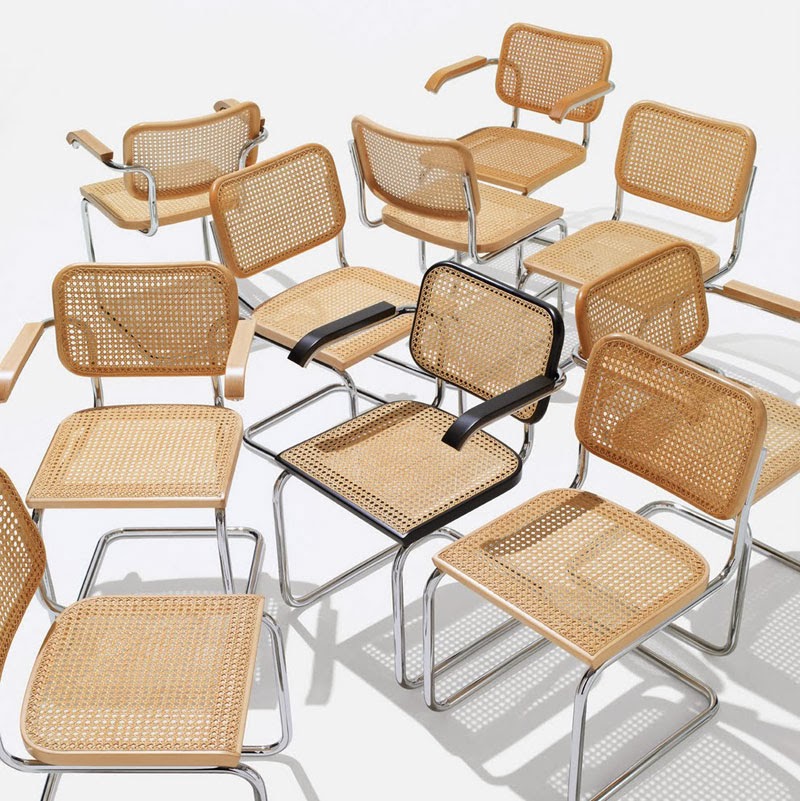
Above, Marcel Breuer’s revolutionary Cesca chair, designed in 1928, mixes caning and wood with the industrial-age aesthetic of cantilevered tubular steel.
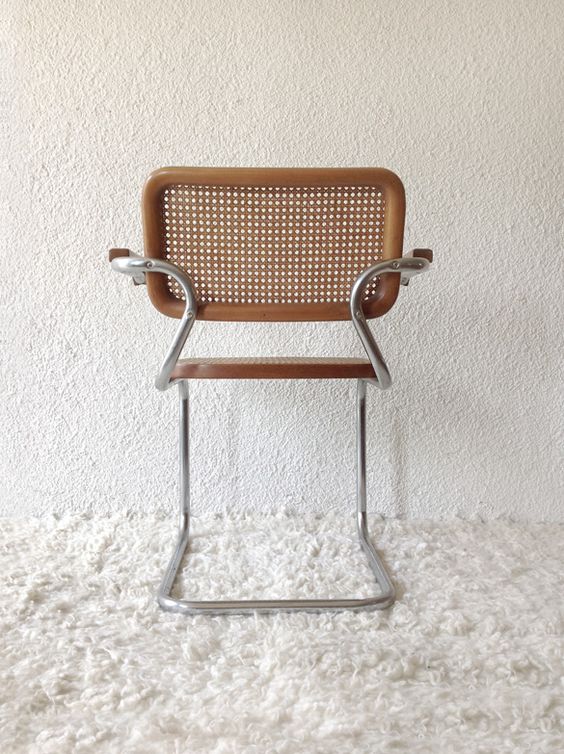
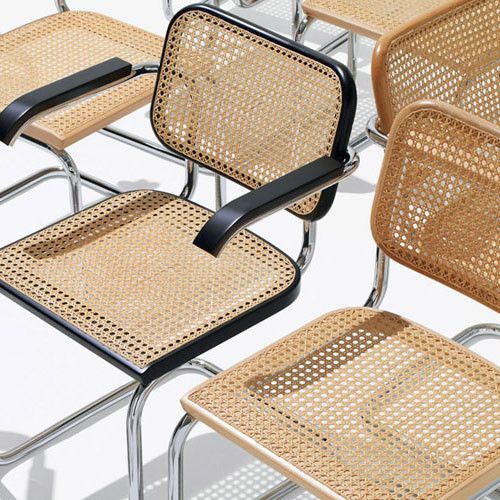
Breuer designed the Cesca Chair (named after Breuer’s adopted daughter Francesca (nicknamed Cheska)) in 1928. It was the first chair made with tubular steel and caned seating that was mass-produced.
One of the original Cesca Chairs is on display in the Museum of Modern Art, Manhattan. Cara McCarty, Associate Curator at the Department of Architecture and Design at museum referred to the design as being “among the 10 most important chairs of the 20th century.”
In 1968 the design was purchased by Knoll Associates (the Knoll Group). Since then, approximately 250,000 Cescas have been sold. The three official manufacturers of the chair were: Thonet (from 1927), Gavina (1950s) Knoll (1960s).
The Cesca joined traditional craftsmanship with industrial methods, the cantilevered form giving the chair added flexibility and comfort. Modern incarnations (like the one above) offer arm and armless versions with hand-woven cane seat and back.
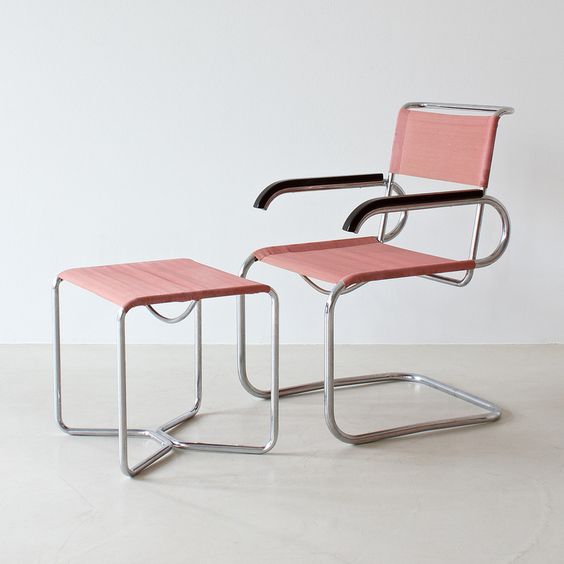
Above, Marcel Breuer’s version of the cantilever chair, the B55 and the B8 stool, both created for Thonet in 1932.
B55 Cantilever Chair
REF: 02085
STYLE: Bauhaus
DESIGNER: Marcel Breuer
COUNTRY: Germany
MANUFACTURER: Thonet Mundus AG
MODEL: B 55
MATERIAL: chrome plated tubular steel, iron thread (Eisengarn), stained wood
YEAR: 1932
CONDITION: original
DIMENSIONS: h.: 86 cm x w.: 42 cm x d.: 51 cm
B8 Stool
REF: 02076
STYLE: Bauhaus
DESIGNER: Marcel Breuer
COUNTRY: Germany
MANUFACTURER: Thonet Mundus AG
MODEL: B 8
MATERIAL: chrome plated tubular steel, iron thread (Eisengarn)
YEAR: 1932
CONDITION: original
DIMENSIONS: h.: 45 cm x w.: 42 cm x d.: 45 cm
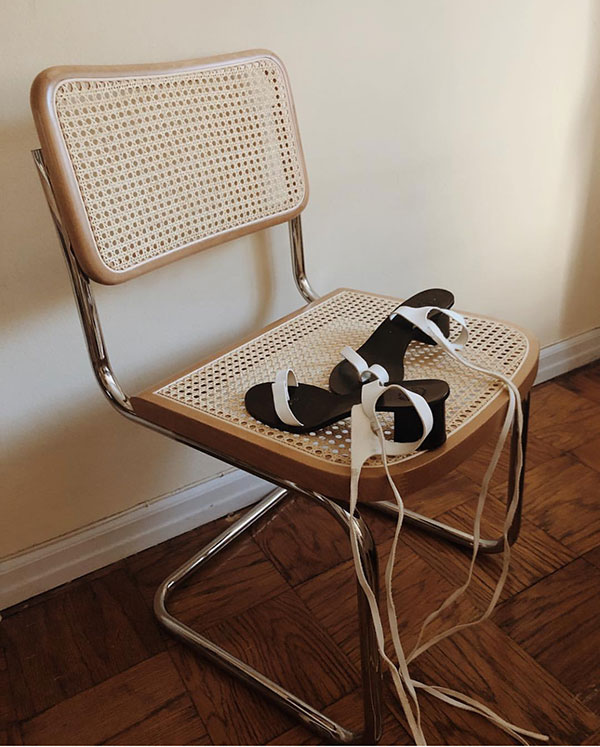
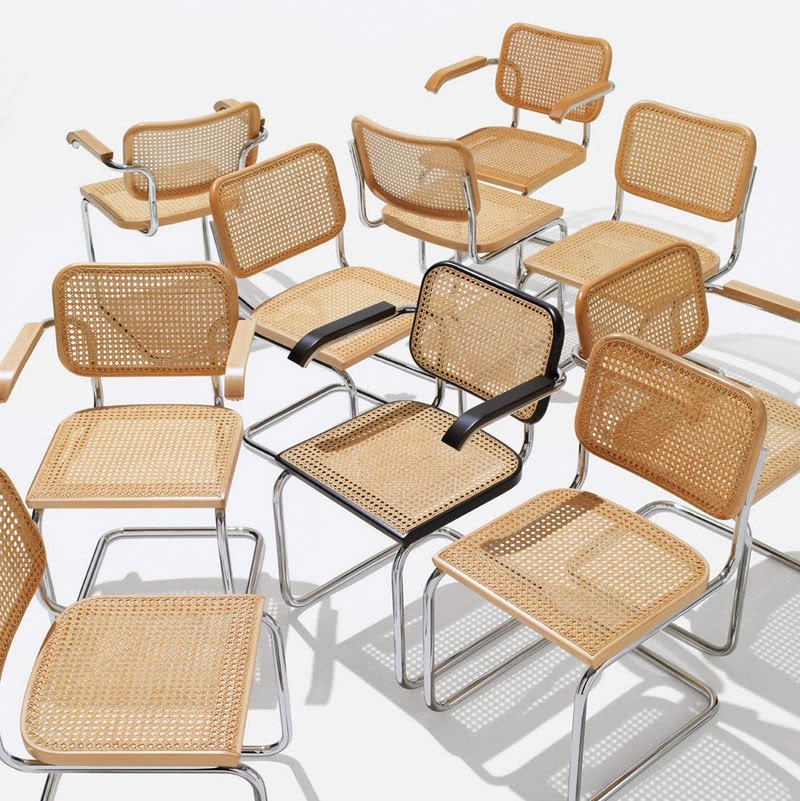
Steel tubing, when applied to furniture for the home, was one of the most dramatic innovations in 20th-century design. It created a striking new profile not just for chairs, but also desks and dining and coffee tables. The industrial material transformed the home environment from one characterized by bulky upholstered furniture to one of clean lines and simplicity. Needless to say, tubular steel furniture became an international sensation and a modern institution.